Who Makes the Dancing with the Stars Costumes? Inside the Ballroom Wardrobe (2026)
Key takeaways
- Two designers run the ballroom: Daniela Gschwendtner on the women's looks and Steven Norman Lee on the men's. Gschwendtner has been with the show since 2009.
- The department builds more than 200 costumes a week with about 20 people plus a separate tailor shop, on a five-day clock per episode.
- Every stone goes on by hand with a glue syringe, and everything stretches — the men's suits and shirts included.
- You cannot buy the costume itself. The closest things we could buy today cost $34.99, $149 and $2,900, and the last one is a dress that was actually danced in on the show.
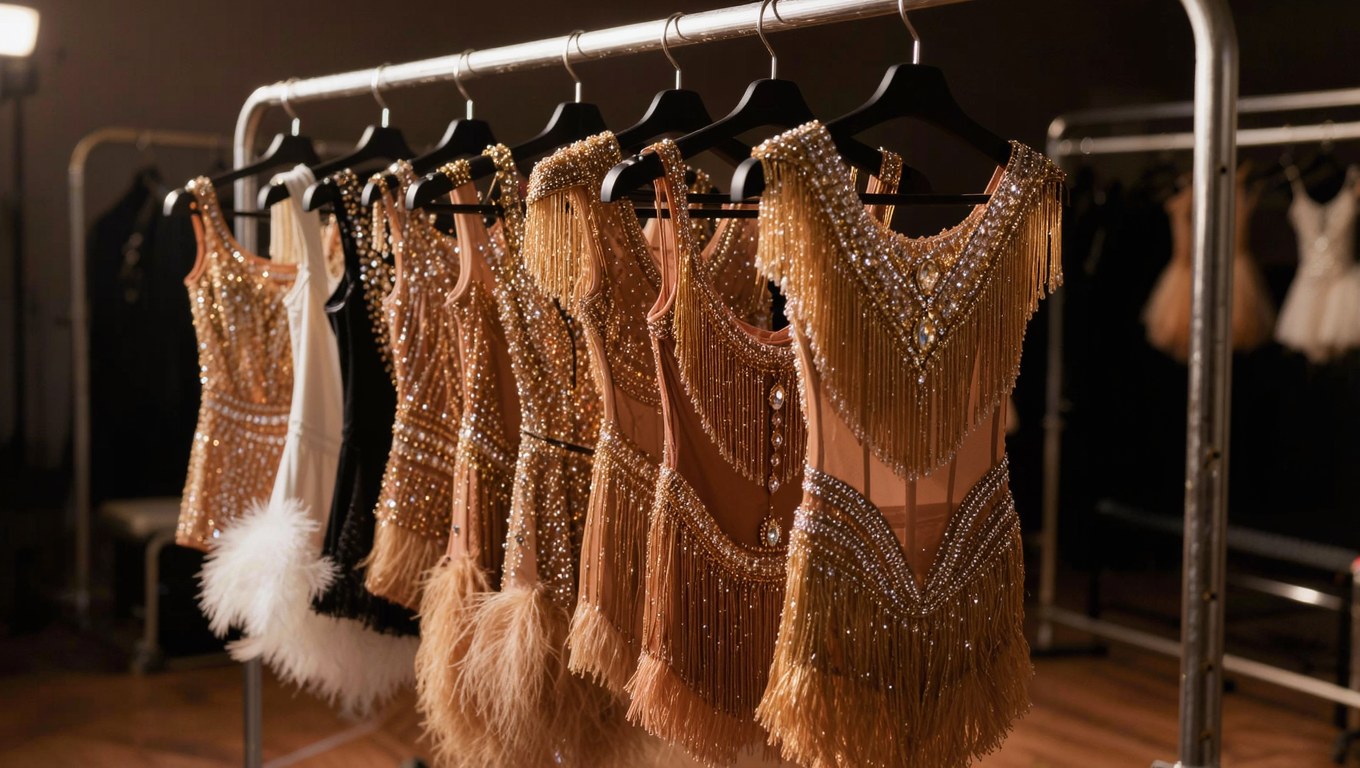
Quick answer — the costumes are built in-house at the studio, not bought. A wardrobe department of roughly 20, led by Gschwendtner and Lee, makes over 200 pieces a week, stones them by hand, and fits them tight about two hours before the show goes live. Nothing on that rack is sold to viewers. What you can buy is the shape: a fringed, stoned, stretch mini at $34.99, a competition dress at $149, or a retired show costume at $2,900.
Who actually makes the Dancing with the Stars costumes?
Two heads of department, splitting the room. Gschwendtner leads the women's looks with a team of nine to 11; Lee runs a smaller tailor's team on the men's. They start from the choreography, not from a sketchbook — the designers have said the pros are in the conversation early, with Derek Hough, Mark Ballas and Val Chmerkovskiy named as the most involved. A skirt that will not open on a spin is a failed costume no matter how it photographs. The same order of operations, movement first, shows up in every scripted wardrobe too; we walked through it in how TV wardrobes actually work.
How many costumes does one week need?
More than 200. That number covers the celebrities, the pros, the troupe and whatever guest number is on the board, and it resets every week, because looks are generally not repeated in competition. Gschwendtner's line is that they try to keep everybody in something different each week; retired pieces come back for group numbers, promo shoots and the touring show instead.
| The week, roughly | What happens |
|---|---|
| Five days, maximum | Every look for one episode is designed, cut and sewn |
| About half a day | Build time per costume, before any stoning |
| First fitting | A plain “shell” is tried on; stones go on only after it fits |
| Two hours to air | Costumes pulled snug and pinned for the live broadcast |
| Department | About 20 people, plus a separate tailor shop |
Why does every single piece have to stretch?
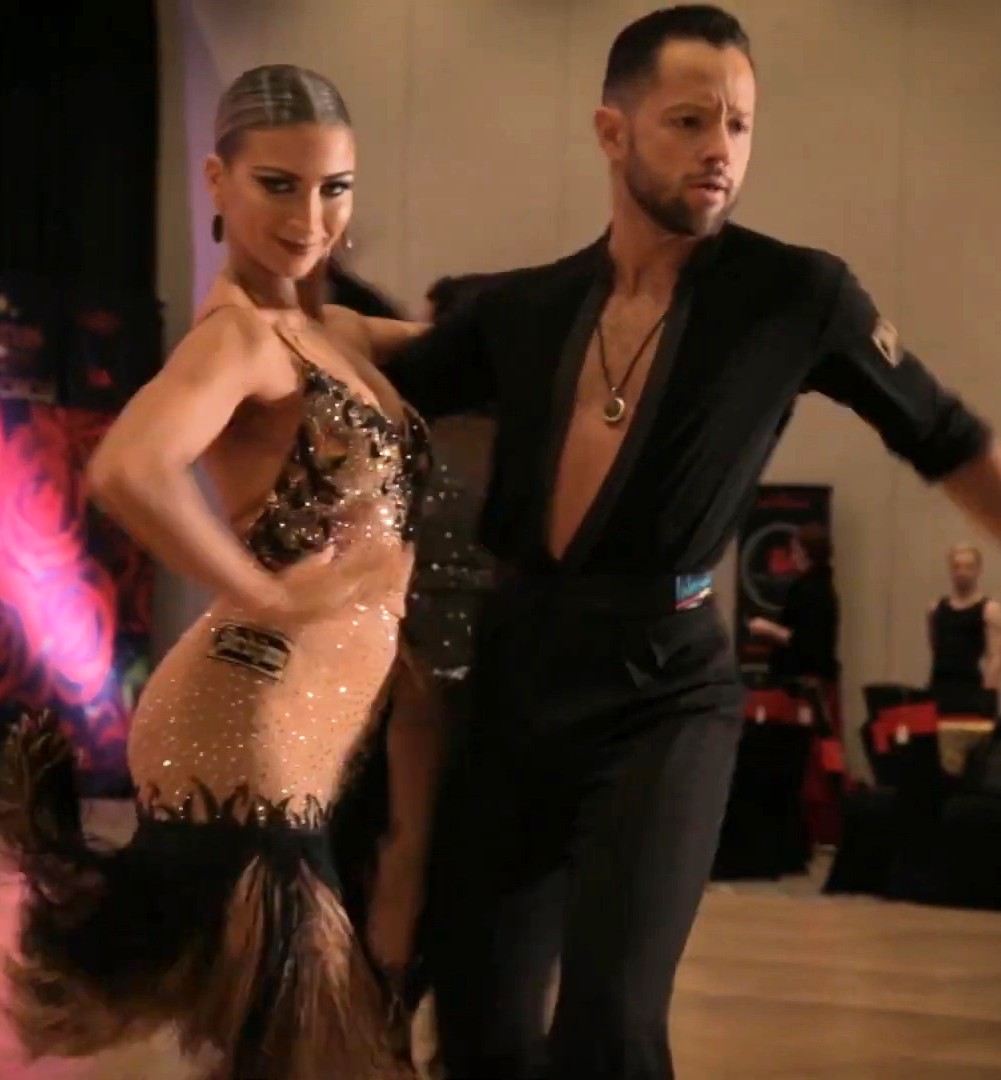
Because a ballroom costume is athletic wear wearing a gown's clothes. Lee's rule is that everything stretches, and that includes the suits and the shirts built for the men. Shirts are constructed to stay tucked through lifts, jacket shoulders are reinforced so they do not ride up, and sleeves are cut for arms that spend two minutes over the dancer's head. Stretch mesh and lycra jersey do the invisible work; the rhinestones get the credit.
How do the rhinestones go on?
By hand, one at a time, with glue syringes. That is the part of the process the designers point to when asked what separates the ballroom from ordinary stagewear, and it is also why the stoning happens at the very end — a stoned garment cannot be altered easily, so the fit is locked first. It is the same labor-per-square-inch argument that decides costume awards; the winners from this year's ceremony are in our Creative Arts costume roundup.
Can you buy a Dancing with the Stars dress?
Not the one from this week. Below are the three honest tiers, priced on each seller's own site on Sept. 16, 2026, at 12:35 a.m. ET.
| Tier | What it is | Price | Notes |
|---|---|---|---|
| Where show dresses go | Encore Ballroom Couture, sale and rental | Varies | Costumes stay with the production; the only ones that reach the public are retired pieces. Encore holds the largest collection outside ABC through a partnership with Randall Christensen, the show's lead designer for 11 seasons from 2006 and a Primetime Emmy winner for it. |
| The shape | Flolae Sequin Slip Mini Dress With Strappy Back | $34.99 | All-over sequin, strappy open back, mini length, S–3XL in gold or purple. A party dress that reads ballroom on camera, not a dance dress. |
| The real thing, new | Dance America D502 Short Latin Dress | $149 | 95% polyester, 5% spandex, Czech rhinestone back detail, made in the USA, eight colors. Built to be danced in; colors and sizes move fast. |
| Worn on the show | Randall Designs Short Gold Bugle Beaded Fringe | $2,900 | Made for Jane Seymour's cha-cha-cha in season 5, week 7. One size S, one dress, no restock. |
Fit note: fringe is heavier than it looks and swings a beat behind you, so size for the shoulders and let the hem do the moving.
For the same three-tier treatment on a competition finale, see the Project Runway finale price checks, and the carpet version of it in this year's Emmys best looks.
What about the clothes they rehearse in?
Different wardrobe entirely, and a different budget, because the cast lives in it for hours a day. That side of the closet belongs to our sister desk: what the season 35 cast trains in, and what it costs.
Ballroom wardrobe FAQ
| Question | Answer |
|---|---|
| Who designs the costumes now? | Daniela Gschwendtner and Steven Norman Lee, the show's current head designers. |
| Are the costumes reused? | Rarely in competition. They come back for group numbers, promotional shoots and the live tour. |
| Do the celebrities pick their own looks? | They fit and weigh in, but the look is built around the dance and the pro's choreography. |
| How much does one cost to make? | The production does not publish per-costume figures. Retired show dresses resell from roughly $750 to $3,600, which is the closest public read on materials and labor. |
| Are men's costumes made too? | Yes — suits, shirts and trousers are built in the tailor shop rather than bought, so they can stretch. |
Where do I see what everyone actually wore? The performance nights are recapped at Reality On Air. Our own week ahead in TV clothes is in TV Fashion Next Week, and every carpet lands in Red Carpet.
For a wardrobe built the opposite way — vintage sourcing instead of hand-stoning — read the Carolyn Bessette clothes in Love Story, and for host dressing on a live show, Mariska Hargitay's Emmys looks. More of this file sits in Reality Looks.
Sources
- Primetimer and Yahoo Entertainment — Gschwendtner on hand-stoning, the 200-plus weekly count, the shell fitting and the pros' involvement.
- TV Insider — the five-day build, the roughly 20-person department, stretch in everything, and the two-hour pre-show fitting.
- Wikipedia and Good Morning America — the 16 couples, the two-night split and the birth-year song format.
- Prices: Flolae, DanceShopper and Randall Designs, checked Sept. 16, 2026, 12:35 a.m. ET. Collection details from Encore Ballroom Couture.